
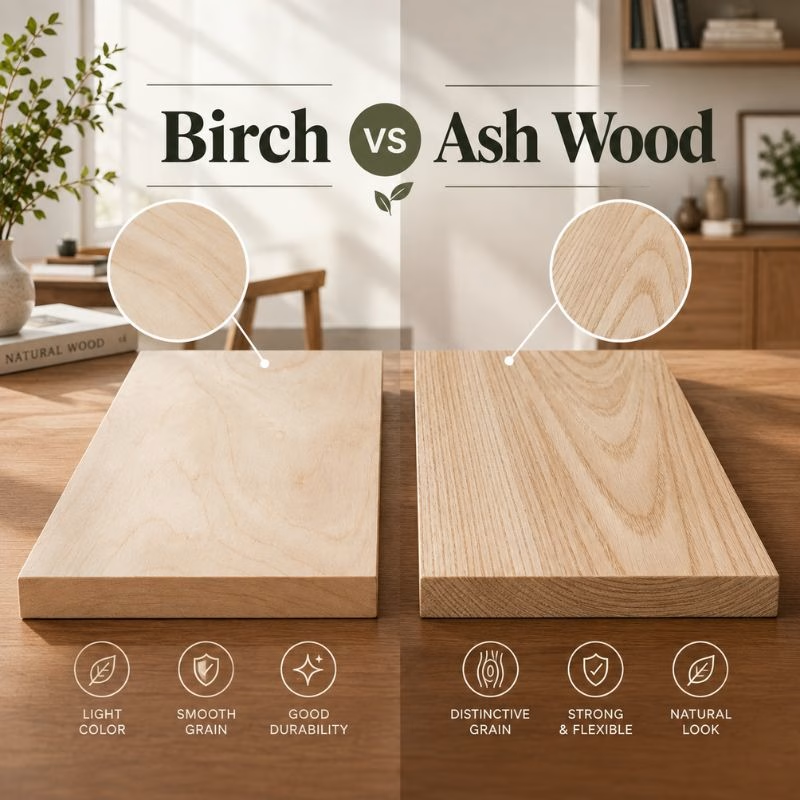
Birch and Ash are both light-coloured hardwoods that suit Scandinavian, Japandi and modern interiors. At first glance they can look similar — but the difference becomes obvious once you see them side by side.
Ash has a bolder, more visible grain that makes each piece look textured and expressive. Birch is finer, smoother and more uniform, which often suits clean furniture forms where the shape matters more than a pronounced wood pattern.
This guide compares birch vs ash wood across colour, grain, durability, stain/paint behaviour and furniture applications. Note that hardness and appearance vary by exact species, so not every Birch or Ash board performs identically.
Quick Answer: Is Birch or Ash Better for Furniture?
Choose Ash for visible grain, natural wood character, dining tables/chairs with visual impact, and stained or natural finishes.
Choose Birch for smooth subtle grain, minimalist furniture, desks, cabinets, bedroom pieces, and painted finishes.
Representative hardness is close — American Ash ~1,320 lbf vs Yellow Birch ~1,260 lbf. Ash is usually better when you want the grain to stand out; Birch is usually better when you want a smoother, quieter surface.
Birch vs Ash Wood: Quick Comparison
| Feature | Ash | Birch |
|---|---|---|
| Natural colour | Pale cream to light brown | Creamy white to pale yellow-brown |
| Grain | Pronounced, more visible | Fine, subtle, more uniform |
| Surface appearance | More expressive | Smoother and quieter |
| Representative Janka | American Ash ~1,320 lbf | Yellow Birch ~1,260 lbf |
| Natural/stained finish | Grain remains prominent | More understated |
| Painted finish | Grain may remain visible | Often gives a smoother look |
| Common style fit | Japandi, Scandinavian, Contemporary | Minimalist, Mid-Century, Scandinavian |
| Typical uses | Tables, chairs, sideboards | Desks, cabinets, painted furniture |
Quick takeaway: The practical difference is more visual than mechanical — Ash makes the grain part of the design, while Birch lets the furniture shape and finish take more attention.
Janka measures dent resistance only — not scratch resistance, moisture resistance or lifespan. Hardness varies by species; the figures above use American Ash and Yellow Birch as representative examples.
Colour and Grain: The Biggest Difference
Ash — More Visible Grain and Character
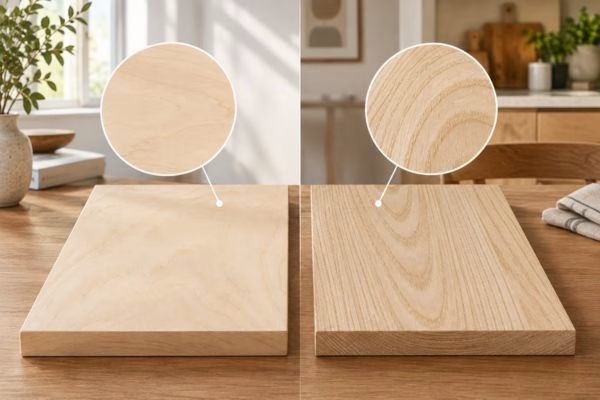
Pale cream to light yellow-brown with strong growth-ring contrast. The grain can create a flowing, cathedral-like appearance depending on the cut. The overall impression is natural, textured and expressive — a strong fit for Japandi, Scandinavian and Contemporary interiors where the wood pattern is part of the design. For a deeper comparison with another grain-forward species, see Oak vs Ash.
Birch — Fine Grain and a Cleaner Look
Creamy white to pale yellow-brown, sometimes warmer at the heartwood. Grain is fine, more uniform and visually subtle. The overall impression is smooth, calm and minimalist — well suited for Mid-Century, Scandinavian and Minimalist interiors where the furniture form matters more than the wood pattern.
Consumer takeaway: Choose Ash when the grain itself is part of the design. Choose Birch when you want a calmer surface that does not compete with the furniture form.
Which Is More Durable for Everyday Furniture?
American Ash (~1,320 lbf) and Yellow Birch (~1,260 lbf) are close enough in hardness that the difference is unlikely to matter in daily use. Some Birch species can be softer than Yellow Birch, so the exact species being offered matters. Both are suitable choices for dining tables, chairs, desks and cabinets.
Ash has a reputation for good shock resistance and toughness, but that does not mean it cannot crack. Real-world durability depends on wood quality, construction, joinery, finish and maintenance. For most household furniture, construction and finish matter more than the small hardness gap between comparable Ash and Birch species.
Ash or Birch for Stain and Paint?
Ash — Grain Stays Visible
Ash’s pronounced grain remains prominent through stain, tinted oil and darker finishes. This is an advantage when you want to preserve natural wood character. The grain may also show through paint depending on finish build.
Birch — Smoother Finish Result
Birch’s fine texture creates a visually cleaner surface under natural pale finishes, light stains and paint. Dark stain results depend on surface preparation, board selection and finishing system — not the species alone.
Decision rule: Choose Ash when you want the grain to remain visible through the finish. Choose Birch when you prefer a smoother, more understated or painted appearance.
Which Wood Works Better for Different Furniture?

Ash is a strong fit for:
- Statement dining tables
- Dining chairs
- Sideboards and consoles
- Shelving
- Furniture where grain adds visual interest
Birch is a strong fit for:
- Desks and bedroom furniture
- Cabinets
- Light-coloured children’s furniture designs
- Painted pieces
- Clean-lined minimalist designs
These are style tendencies, not limitations. Birch can make a fine dining table and Ash can be painted. Product design and construction matter more than species label alone.
Birch or Ash: Which Should You Choose?
Choose Ash if you like visible grain, strong natural wood character, stain or natural finishes, and furniture that becomes a visual feature in the room.
Choose Birch if you prefer a smoother surface, subtle grain, Minimalist or Mid-Century interiors, and painted or pale-finish furniture.
If both appeal equally: compare the exact species being offered, board quality, construction, finish and actual quotation. The species name alone does not tell the whole story.
Bottom Line: Ash is usually the better choice for expressive grain and natural finishes. Birch is usually the better choice for smooth, understated furniture.
FAQ — Birch vs Ash Wood
Conclusion: Choose by Grain and Finish, Not Just Hardness
Ash is grain-forward and visually expressive. Birch is smoother, quieter and more minimalist. Both can produce durable furniture when construction and finish are done well. The better choice is the wood whose grain, finish and visual character best suit the furniture you are buying.
For brands and buyers developing furniture in Ash, Birch or other hardwoods, Moc Luc can review material selection, construction details and finish specifications at the project level.
Discuss Your Furniture Development Requirements
Moc Luc — Flexible OEM/ODM Partner for Solid Wood Furniture Brands