

If you want to prevent wood furniture from cracking in winter, the most important thing is to control the environment around it. When heating runs constantly, indoor air can become noticeably drier, causing solid wood to lose moisture and contract over time.
This seasonal movement may appear as small gaps, loose joints or visible cracks. A common cause is prolonged dry indoor air, rapid humidity changes or localised heat — rather than low outdoor temperature itself.
This guide explains how to prevent wood furniture from cracking by managing indoor humidity, avoiding concentrated heat, caring for the existing finish correctly and knowing what to do when a crack first appears.
Quick Answer: How to Prevent Wood Furniture from Cracking in Winter
- Monitor indoor humidity — avoid letting the room stay very dry for prolonged periods.
- Keep furniture away from direct heat — radiators, fireplaces, space heaters and hot-air vents.
- Care for the existing finish correctly — do not automatically apply oil or wax to every piece.
- If a crack appears, stabilise the environment first — before reaching for filler or glue.
The best way to prevent winter cracking is to keep indoor conditions reasonably stable, avoid concentrated heat and follow the correct care routine for the furniture’s existing finish.

Why Does Wood Furniture Crack in Winter?
Solid wood naturally gains and loses moisture depending on the surrounding air. When heating dries the indoor air, wood releases moisture and contracts. Because wood does not shrink evenly in all directions, a tabletop can develop gaps, joints can loosen and boards can warp or crack.
Several factors increase the risk: prolonged dry indoor air, sudden humidity changes, direct heat concentrated on one area of the furniture, and construction that restricts natural wood movement.
Consumer takeaway: Wood movement is normal. Problems are more likely when conditions change too quickly, stay very dry for too long, or affect one part of the furniture more than another.
1. Prevent Wood Furniture from Cracking by Keeping Humidity Stable
Use a digital hygrometer to check actual room humidity rather than guessing. For many homes, roughly 30–50% RH is practical general indoor guidance; furniture-specific recommendations may vary, so stable conditions matter more than chasing one exact number. If your room regularly drops below 30%, consider running a humidifier. Do not point the mist directly at furniture, and clean the device according to its instructions.
What to avoid: Do not push humidity too high, and do not change room humidity rapidly just because you noticed a small crack. Measure first — stable indoor humidity is more useful than guessing whether your furniture needs oil, wax or extra moisture.
2. Keep Furniture Away from Direct Heat and Strong Sunlight

Avoid placing furniture directly next to a radiator, in front of a hot-air vent, close to a fireplace or beside a portable heater. Concentrated heat can dry one part of the wood faster than the rest, creating uneven stress. Follow the clearance guidance of your heating appliance and ensure hot airflow does not blow directly onto the furniture.
Direct sunlight can also create localised heating while gradually changing the colour and finish over time. Use blinds or curtains when strong sunlight falls directly on the furniture for extended periods.
Underfloor heating: Underfloor heating is not necessarily a problem for wood furniture on its own. Room humidity, heat settings, furniture construction and the manufacturer’s care guidance also matter.
3. Care for the Existing Finish Correctly

First, Identify the Finish
Furniture finishes include lacquer, polyurethane, varnish, hardwax oil, oil and wax — each requiring a different care routine. If you are unsure which finish your furniture has, check the care label, manual or ask the retailer. Do not apply one generic oil-and-wax routine to every piece of furniture.
Do You Need to Oil Wood Furniture in Winter?
Not automatically. Oil or wax should only be applied when the furniture actually uses an oil, hardwax-oil or wax finish and the manufacturer recommends periodic maintenance. Do not apply maintenance oil to lacquered or polyurethane-finished furniture unless the manufacturer specifically recommends it. Avoid olive oil, cooking oil and DIY mixtures — these are not furniture-care products.
For cleaning, do not soak the surface with water. A slightly damp, well-wrung cloth is may be appropriate for many stable finishes for many stable finishes. When in doubt, follow the manufacturer’s care instructions. For polishing and routine care, always match the product to the finish type.
4. What Should You Do If a Crack Appears?
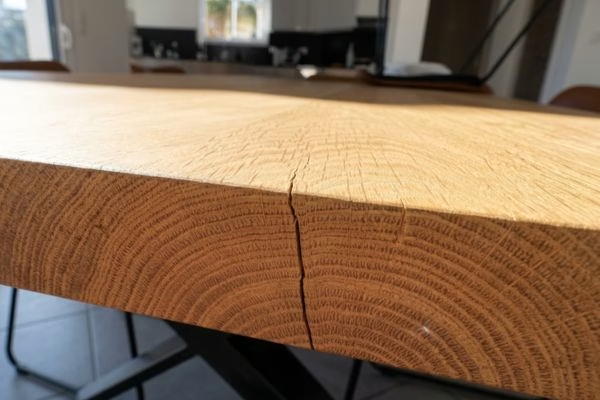
Check the room humidity and whether the furniture is near a direct heat source. If it is, reduce concentrated heat or move the furniture if practical. Stabilise indoor conditions first — do not rush to apply glue, filler or wax stick. Some small seasonal gaps may change size as humidity shifts, but an actual crack should not be assumed to be self-repairing. If it has caused visible surface damage or finish separation, address the environment first, then consider repair.
Contact a repair professional if:
- The crack continues to widen
- The tabletop begins to warp
- A joint has loosened or the furniture is no longer stable
- Veneer is lifting
- The crack crosses a structural joint
- Finish is flaking or separating around the damaged area
Treat the cause before hiding the crack. A cosmetic repair can mask movement that is still continuing.
Winter Wood Furniture Care Checklist
| What You Notice | Check First | What to Do | Avoid |
|---|---|---|---|
| Room feels very dry | Hygrometer reading | Stabilise humidity | Over-humidifying |
| Small seasonal gap | Room RH + heat source | Monitor after stabilising | Filling immediately |
| New crack | Dry air / direct heat | Move from heat, monitor | DIY glue first |
| Finish looks dull | Finish type | Follow care instructions | Random oils |
| Loose joint | Stability + movement | Reduce stress, inspect | Forcing joint closed |
| Veneer lifting | Adhesion / movement | Seek repair advice | Adding water or oil |
Bottom line: Winter furniture care is mainly about environmental stability — keep humidity reasonably steady, avoid concentrated heat, care for the existing finish correctly and respond early to new damage.
FAQ — Winter Care for Wood Furniture
Conclusion: Stable Conditions Matter More Than “Feeding” the Wood
To prevent wood furniture from cracking, focus first on stable indoor conditions rather than adding more oils or surface treatments. Dry indoor air and sudden environmental changes are the main winter risks — not cold weather itself. Keep furniture away from direct heat, maintain reasonably stable humidity and care for the existing finish according to the manufacturer’s instructions. Adding oil or wax does not replace environmental control. Good winter wood care is less about applying products to the surface and more about keeping the furniture in a stable, well-managed indoor environment.
For brands, retailers and buyers developing solid-wood furniture, Moc Luc can review material selection, construction details and finish requirements with the expected indoor environment and end use in mind.
Discuss Your Furniture Development Requirements
Moc Luc — Flexible OEM/ODM Partner for Solid Wood Furniture Brands