
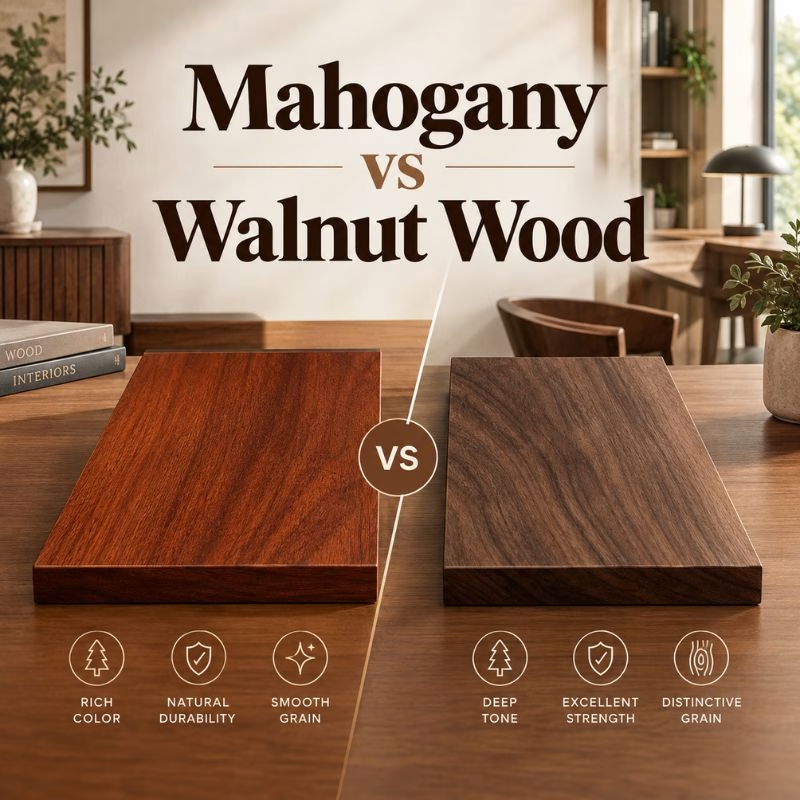
Walnut tends to feel dark, modern and understated. Mahogany leans warmer, with reddish-brown tones and a more classic presence. Both are excellent hardwoods for furniture — and the biggest difference between them is not really about hardness.
This guide compares mahogany vs walnut wood across four practical factors: colour and grain, durability, furniture style fit and sourcing. By the end, you should have a clear picture of which one suits your project.
In this guide, “walnut” refers to American Black Walnut (Juglans nigra), while “mahogany” refers primarily to Genuine Mahogany (Swietenia macrophylla). African Mahogany (Khaya spp.) is a different commercial group and is not treated as identical.
Quick Answer: Is Mahogany or Walnut Better for Furniture?
Choose Walnut for deep brown/chocolate tones, Mid-Century Modern, Contemporary or warm minimalist interiors.
Choose Mahogany for warmer reddish-brown tones, classic/traditional furniture, or pieces with carved or decorative detailing.
For most buyers, the better choice comes down to colour, grain and furniture style — not hardness alone. Also note: mahogany tends to deepen with age and light exposure, while walnut often lightens over time.
Mahogany vs Walnut Wood: Quick Comparison
| Feature | American Black Walnut | Genuine Mahogany |
|---|---|---|
| Natural colour | Medium to dark brown | Warm pinkish to reddish brown |
| Grain | Flowing, sometimes figured | Usually straight or interlocked |
| Janka hardness | ~1,010 lbf | ~800–900 lbf |
| Dent resistance | Slightly higher | Slightly softer |
| Colour with age | Often becomes lighter/warmer | Tends to deepen/darken |
| Common style fit | Contemporary, Mid-Century | Traditional, classic |
| Decorative detailing | Good | Particularly well suited |
| Sourcing note | Verify origin | Verify exact species and origin |
Quick Takeaway: Walnut generally suits darker contemporary furniture, while Genuine Mahogany suits warmer traditional furniture. Their hardness is close enough that appearance, construction and sourcing usually matter more than the numerical difference.
Janka measures relative dent resistance only — not scratch resistance, moisture resistance or lifespan.
Colour and Grain: The Biggest Difference
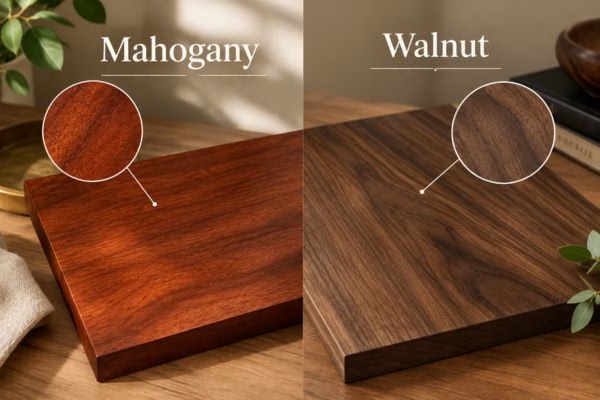
Mahogany — Warm and Traditional
Pinkish to reddish-brown tone that develops richer, deeper warmth over time. Grain is usually straight, sometimes with a ribbon-like figure. The overall impression is warm, refined and formal — a natural fit for Traditional, Classic European and heritage-inspired interiors.
Walnut — Darker and More Contemporary
Medium brown to deep chocolate, sometimes with grey or purplish undertones. Grain flows elegantly and can be figured. The visual character is restrained and sophisticated — well suited for Mid-Century Modern, Contemporary, Japandi and warm minimalist interiors.
Colour aging: Mahogany generally deepens and becomes richer. Walnut often lightens and mellows. The exact change depends on sunlight exposure, finish and placement.
Which Is More Durable for Everyday Furniture?

American Black Walnut sits around 1,010 lbf on the Janka scale, while Genuine Mahogany lands at roughly 800–900 lbf. That gives Walnut a small edge in dent resistance, but both are suitable choices for indoor furniture. The gap is not dramatic enough to make either one unsuitable.
Real furniture durability depends on more than species: timber quality, proper drying, joint construction, finish and ongoing maintenance all play a role. A well-made Mahogany table can perform better over time than a poorly constructed Walnut table.
Which Wood Fits Your Interior Style?
Choose Mahogany if you prefer:
- Warmer reddish-brown furniture
- Traditional or formal interiors
- Carved details and decorative profiles
- Classic desks, sideboards or dining furniture
Choose Walnut if you prefer:
- Naturally dark brown furniture
- Clean contemporary lines
- Visible grain with understated character
- Dining tables, consoles, bed frames or modern desks
These are style tendencies, not strict rules. Design, proportions and finish can make Mahogany look contemporary or Walnut look more traditional.

What Does “Mahogany” Actually Mean?
The word “mahogany” can refer to very different woods. Genuine Mahogany (Swietenia macrophylla) and African Mahogany (Khaya species) are not the same — their properties and sourcing can vary. When furniture is labelled simply “mahogany,” it is worth asking: what species is it, where was it sourced, and can the seller document the origin?
Some woods sold as mahogany are subject to international trade controls, so species identification and documented origin can matter when buying imported furniture. For walnut, confirming whether the product uses American Black Walnut or another walnut species also helps ensure you are comparing like with like.
Mahogany or Walnut: Which Should You Choose?
Choose Walnut when you want a darker contemporary look, prefer natural chocolate-brown colour and value slightly better dent resistance.
Choose Mahogany when you prefer warmer reddish tones, your interior leans classic or the furniture features carving or decorative detail.
If both appeal equally: compare actual board quality, construction, finish and sourcing documentation. Choose by the evidence rather than hardness alone.
Bottom Line: Choose Walnut for darker contemporary furniture and Genuine Mahogany for warmer traditional furniture. If appearance is equally appealing, compare construction and sourcing rather than relying on hardness alone.
FAQ — Mahogany vs Walnut
Conclusion: Choose by Character, Not Just Hardness
Mahogany and Walnut are both proven furniture woods. The difference is more about character than capability. Pick Walnut for dark, contemporary elegance. Pick Genuine Mahogany for warm, traditional richness. And whichever you choose, pay as much attention to construction quality, finish and verified sourcing as you do to the species name.
For buyers and brands developing solid-wood furniture in Walnut, Mahogany or other hardwoods, Moc Luc can review material requirements, construction details and finish specifications at the project level.
Discuss Your Furniture Development Requirements
Moc Luc — Flexible OEM/ODM Partner for Solid Wood Furniture Brands