
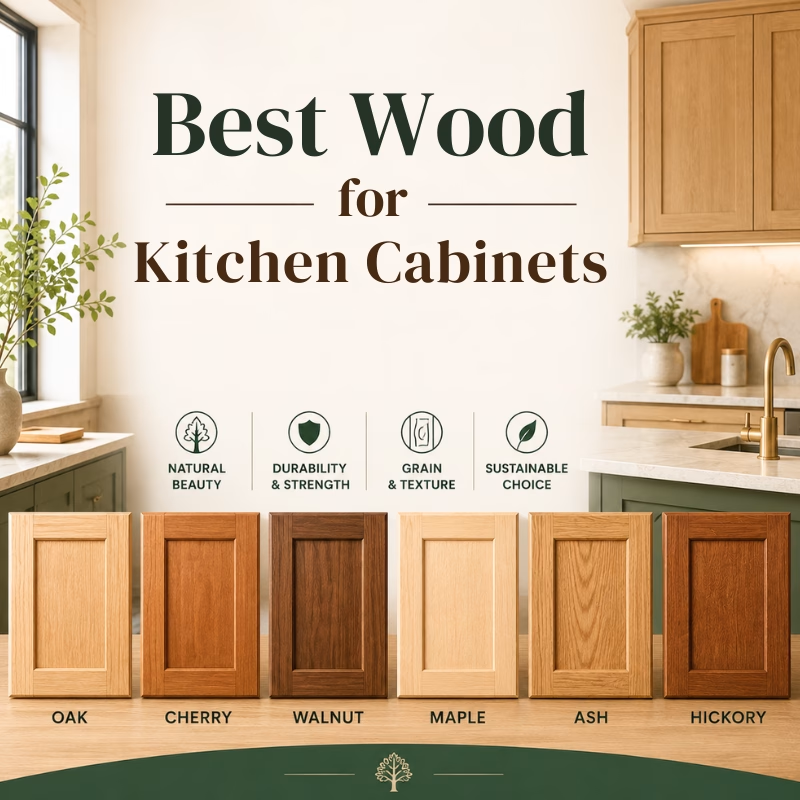
Kitchen cabinets deal with more stress than most furniture in your home — humidity from cooking, water splashes near the sink, grease residue, daily opening and closing, and the odd bump from pots or grocery bags. Most homeowners start by asking “oak or maple?” but the real question is broader. Durability depends on which parts use solid wood versus engineered panels, how the finish protects the surface, and how well the entire cabinet is constructed.
This guide breaks down what actually matters: the visible doors, the cabinet box behind them and the finish that ties everything together.
Quick Answer: What Is the Best Wood for Kitchen Cabinets?
- Painted cabinets: Hard Maple is a strong choice — fine, even texture produces a clean painted surface.
- Natural or stained cabinets: Oak suits homeowners who want visible grain; Cherry works well for a warmer, more traditional look.
- Cabinet boxes: High-quality plywood is commonly used for its dimensional stability on large flat panels.
The best choice depends on whether you are selecting the cabinet doors, visible fronts or the cabinet box — these parts do not necessarily need the same material.
Best Wood for Kitchen Cabinets: Quick Comparison
| Material | Janka Hardness | Main Strength | Works Well With | Consider Before Buying |
|---|---|---|---|---|
| Hard Maple | ~1,450 lbf | Hard, fine texture | Painted cabinets | Grain can be subtle |
| White Oak | Varies by species | Strong visible grain | Stain, oil, clear/matt finishes | Grain remains visually prominent |
| Cherry | ~950 lbf | Warm colour, fine grain | Natural/stained cabinets | Softer; colour darkens with light |
| Red Oak | ~1,290 lbf | Pronounced grain | Stained cabinets | Open grain shows through paint |
| Hickory | ~1,820 lbf | Very hard | Natural/rustic finishes | Strong colour variation |
| Quality Plywood | N/A | Dimensional stability | Cabinet boxes/shelves | Quality varies by grade and construction |
Note: Janka hardness indicates resistance to denting. A higher number does not automatically mean better moisture resistance or a longer-lasting cabinet.
For most homeowners, Hard Maple is a strong choice for painted cabinet fronts, Oak works well when natural grain is part of the design, and high-quality plywood is commonly used for stable cabinet boxes.
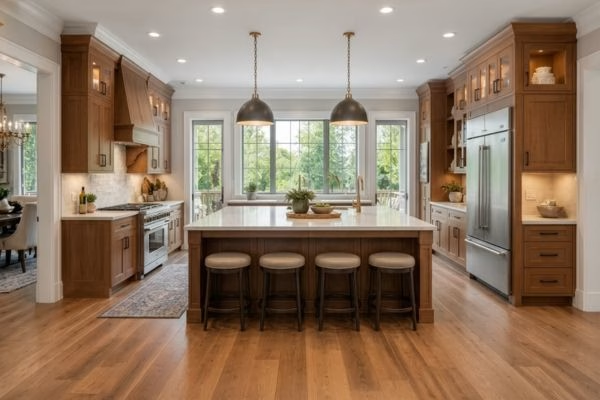
What Matters When Choosing Wood for Kitchen Cabinets?
Appearance: Fine, smooth grain suits painted cabinets; distinct grain suits stained or natural finishes. Dent resistance: Janka hardness gives a rough indication of resistance to dents — but does not measure moisture resistance or overall lifespan. Understanding the difference between hardwood and softwood helps put these numbers in context.
Wood movement: Natural wood expands and contracts with humidity — proper drying, construction and finish matter more than any “magic moisture percentage.” Cabinet construction: Doors and boxes have different requirements, and mixing materials for different parts is common practice.
Best Wood Species for Kitchen Cabinets
Hard Maple — A Strong Choice for Painted Cabinets
Hard Maple has a fine, even texture and a light natural colour, making it well suited for white, cream, grey and other contemporary painted finishes. At approximately 1,450 lbf Janka, it resists everyday dents reasonably well, and paint produces a smoother result on Maple than on open-grained woods like Oak. A solid fit for modern, Shaker or Transitional kitchens with painted doors.
Oak — A Strong Choice When You Want the Grain to Show
Oak works particularly well when visible grain is central to the kitchen design. European Oak and White Oak both offer pronounced natural grain and visual warmth, pairing well with stain, oil or clear matt finishes. White Oak is less permeable to liquid than some more porous woods, although the wood itself is not waterproof. Oak suits Scandinavian, Japandi, Organic Modern and contemporary European kitchens.
Cherry — Warm Colour and a Softer, Traditional Look
Cherry has a fine grain and a warm natural colour that deepens into a richer reddish-brown tone as it is exposed to light over time. With a Janka of approximately 950 lbf, it is softer than Maple or Oak and more susceptible to dents from heavy impacts. Cherry works well in Traditional, Transitional and Craftsman-inspired kitchens where warmth matters more than maximum hardness.
Red Oak and Hickory — Alternative Choices
Red Oak (~1,290 lbf Janka) has a bold, open-pored grain that works better with stained finishes than ultra-smooth paint. Hickory (~1,820 lbf Janka) is very hard and dent-resistant but comes with strong colour variation — it suits rustic, farmhouse or character-rich kitchens. High density does not automatically mean high moisture resistance.
Other options: Yellow Poplar (Tulipwood) can work for painted components in some cabinet systems, while Pine offers a softer, rustic look — though it dents more easily than hardwoods.
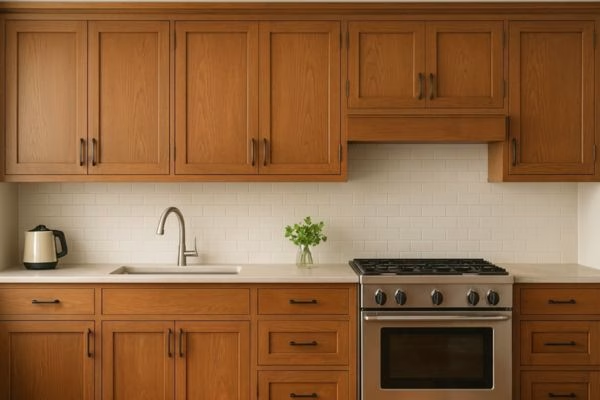
Painted vs. Natural-Grain Cabinets: Which Wood Should You Choose?
For Painted Cabinets
Prioritise fine texture, smooth surface and predictable painted appearance. Hard Maple is a strong option. For five-piece doors, engineered centre panels such as MDF are sometimes combined with solid-wood frames to improve dimensional stability.
For Natural or Stained Cabinets
Prioritise attractive visible grain, natural colour and finish compatibility. Oak offers strong grain and a contemporary European look. Cherry delivers a smoother grain with warmer, traditional character.
Key takeaway: Choose the wood for the appearance you want to keep visible — rather than simply choosing the hardest species.
Should Kitchen Cabinet Boxes Be Solid Wood or Plywood?
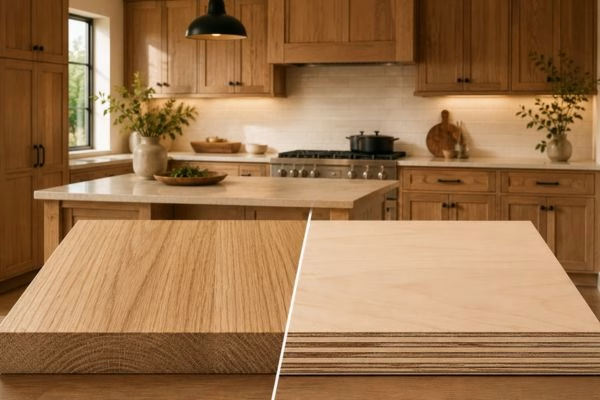
Why Plywood Is Commonly Used for Cabinet Boxes
Solid wood naturally expands and contracts across the grain when humidity changes. For large flat panels — cabinet sides, shelves, bottoms — this movement can become a practical issue. High-quality plywood, made from cross-laminated veneer layers, offers better dimensional stability for these surfaces. Solid wood remains well suited for doors, face frames and visible trim where appearance and tactile quality matter most.
Panel thickness alone does not determine quality. Buyers should also consider plywood grade, joinery, hardware and overall cabinet construction.
Consumer takeaway: A cabinet with solid-wood fronts and a high-quality plywood box can be a very practical combination. “100% solid wood” is not automatically better — what matters is the right material in the right place.
What Finish Helps Protect Kitchen Cabinets?
Wood species alone does not protect a kitchen cabinet from water, grease or cleaning products. A durable finish adds moisture resistance, stain resistance, cleanability and wear resistance. Common types include polyurethane, professionally applied cabinet coatings and conversion-type finishes — each with different performance characteristics. For oil or hardwax-oil finishes, performance varies by product, so check the manufacturer’s care instructions.
Pay attention to the complete finish system and maintenance requirements — not just whether the label says “oil,” “lacquer” or “polyurethane.”
FAQ — Best Wood for Kitchen Cabinets
Conclusion: Choose the Material for Each Part of the Cabinet
The best kitchen cabinet is not necessarily the one made from the most expensive wood. Hard Maple is a strong option for painted doors, Oak or Cherry suits natural-grain fronts, and quality plywood is a practical choice for cabinet boxes. A well-designed combination of solid-wood fronts, stable panels and a durable finish often makes more sense than using one material throughout.
For designers, furniture brands, retailers and project buyers developing custom solid-wood cabinet components, Moc Luc works with Hard Maple, Oak and Cherry across project-specific finishes and construction requirements.
Discuss Your Custom Cabinet Component Requirements
Moc Luc — Flexible OEM/ODM Partner for Solid Wood Furniture Brands