

A coffee table that sits too high crowds your sofa and kills the room’s proportion. Too low and you’re hunching over every time you reach for a cup. The right coffee table height — matched to your sofa, your room layout and how you actually live — changes everything. This guide covers every number you need: height in cm and inches, sofa pairing rules, clearance, shapes and solid wood considerations.
The standard coffee table height is 16–18 inches / 40–46 cm. The tabletop should sit level with — or 1–2 inches lower than — your sofa’s seat cushion. Keep 14–18 inches / 35–45 cm of clearance between sofa edge and table edge, and size the length at ½ to ⅔ of your sofa’s seating length.
- Standard coffee table height: 16–18 in / 40–46 cm
- Height rule: level with or 1–2 in below sofa seat cushion
- Sofa-to-table gap: 14–18 in / 35–45 cm
- Table length: ½ to ⅔ of sofa seating length
- Recliner / deep-seat sofas: increase gap to 18–22 in / 45–55 cm+
| Measurement | Recommended Range | Why It Matters |
|---|---|---|
| Standard coffee table height | 16–18 in / 40–46 cm | Works with most standard sofas |
| Sofa-to-table height rule | Level with or 1–2 in lower than sofa seat | Keeps reach and sightlines comfortable |
| Sofa-to-table gap | 14–18 in / 35–45 cm | Easy reach without crowding knees |
| Coffee table length | ½ to ⅔ sofa seat length | Keeps the table proportional |
| Main walkway clearance | 24–30 in / 60–76 cm | Allows movement around the table |
| Recliner clearance | 18–22 in / 45–55 cm+ | Prevents knee / footrest collision |
Table of Contents
- Coffee Table Height Rule: Match the Sofa First
- Coffee Table Length and Width Formula
- Living Room Clearance: How Far From Your Sofa?
- Choosing the Best Coffee Table Shape for Your Sofa
- Solid Wood Construction: Base Footprint, Stability and Safety
- Lift-Top Coffee Tables for Small and Multitasking Spaces
- Coffee Table Sizing Matrix
- Conclusion: Better Proportion, Better Comfort

Getting coffee table height right transforms a living room — proportion, reach and flow all depend on it.
Coffee Table Height Rule: Match the Sofa First
The standard coffee table height of 16–18 in / 40–46 cm is a practical starting point — but the number that actually determines comfort is your sofa seat height. The golden rule: the tabletop should sit level with or up to 1–2 inches (2.5–5 cm) below the sofa cushion surface.
Get this ratio wrong in either direction and the problems show up fast. A table that rises above the seat height creates visual clutter, makes the room feel heavy and forces awkward shoulder positions when reaching across. A table set too low means bending deep at the waist every time you pick up a coffee cup, a book, or a remote.
⇒ The right coffee table height also depends on your sofa — see our wooden vs fabric sofa comparison
Why “Same Height” Works
When the tabletop matches the sofa seat, your arm extends naturally forward and slightly down — the most relaxed reach posture. This also keeps the table visually anchored to the seating zone rather than floating above it.
Cushion Compression Factor
Soft upholstered sofas can compress 2–4 cm under body weight. A sofa listed at 18 in may feel closer to 16 in when seated. Always estimate or test the seated height before matching your table.
| Sofa Type | Typical Seat Height | Suggested Coffee Table Height |
|---|---|---|
| Low-profile / Italian sofa | 11–15 in / 28–38 cm | 11–14 in / 28–35 cm |
| Standard sofa | 17–19 in / 43–48 cm | 16–18 in / 40–46 cm |
| High-seat / traditional sofa | 20–22 in / 51–56 cm | 18–22 in / 46–56 cm |
| Deep-seat sofa | Varies by cushion compression | Test seated height before choosing |
Before shopping, sit on your sofa normally and measure from the floor to the top of the cushion surface — with your weight on it. That compressed seat height is your real target number. Add 0 to −2 inches to get your ideal coffee table height range.
⇒ Read more: Standard Dining Table Height in cm and Inches — the complete ergonomics guide
Coffee Table Length and Width Formula

A table that is ½ to ⅔ the sofa’s seating length looks intentional — neither lost in space nor overwhelming the room.
The ideal coffee table height only works if the table’s footprint is equally well-considered. A table that is proportionally too short looks abandoned; one that is too long blocks walkways and visually overwhelms the sofa it sits in front of.
The length formula: ½ to ⅔ of your sofa’s actual seating length — measured from inner armrest to inner armrest, not outer edge to outer edge. Thick, padded armrests are not part of the usable seating zone and should not inflate the calculation.
Width / Depth Guidance
Width should be enough to hold a tray, books, a drink and some decor — typically 18–24 in / 45–60 cm for most living rooms. Keep it narrow enough so it does not eat into the walkway behind it or crowd the TV unit opposite.
Sectional Sofa Rule
With L-shaped sectional sofas, the coffee table should sit within the open central zone — not block the chaise end or the entry path into the seating area. Round, square and nesting tables tend to work better than long rectangular ones.
Nesting Tables for Small Spaces
A set of two or three nesting tables with a 2–3 in height difference between each piece offers flexibility in small apartments: pull them apart when entertaining, stack them away when the kids need floor space. No single fixed footprint to work around.
Use painter’s tape on the floor to mark the exact length and width of the table you are considering before you buy. Live with the taped outline for a day. You will quickly feel whether it blocks the natural flow of the room or fits perfectly.
Living Room Clearance: How Far Should a Coffee Table Be From a Sofa?
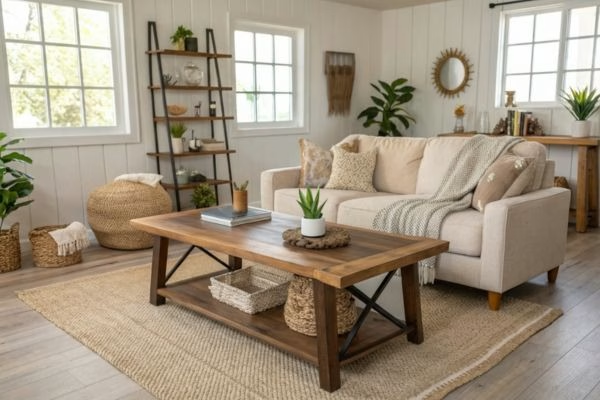
The gap between your sofa edge and the nearest coffee table edge should be 14–18 inches / 35–45 cm. This reach zone is close enough that you can pick up a drink without leaning far forward, but far enough that your knees and shins are not constantly brushing the table when you shift position or stand up.
⇒ A console table follows different height rules — here’s what it is
Reach Zone vs Walkway
The 14–18 in gap is a comfort zone for seated people, not a walkway. The main circulation path behind or beside the table needs to stay at 24–30 in / 60–76 cm minimum to allow people to move freely through the room.
Recliner & Motion Sofa Rule
Open your recliner to its full extension and measure where the footrest lands before placing the table. Most recliners need 18–22 in / 45–55 cm of clearance — or more. Always measure with the recliner fully open, not closed.
| Situation | Recommended Clearance |
|---|---|
| Sofa edge to table edge (reach zone) | 14–18 in / 35–45 cm |
| Main walkway beside or behind table | 24–30 in / 60–76 cm |
| Recliner / motion sofa gap | 18–22 in / 45–55 cm+ |
| High-traffic living room route | 30 in / 76 cm minimum |
| Compact apartment with nesting tables | 12–14 in / 30–35 cm when nested |
With hard-edged solid wood coffee tables, the clearance gap is more important than with soft or rounded alternatives. A sharp oak or walnut table edge at shin height — just 14 in from the sofa — leaves little margin when standing quickly. If you have young children or elderly household members, consider increasing the gap to 16–18 in or choosing a table with a softened or rounded edge profile.
⇒ Read more: How to Measure a Room for Furniture — room clearance, flow paths and furniture footprints
If your living room doubles as a main corridor between rooms, treat the walkway clearance (30 in+) as non-negotiable and work backward from there to choose the table size — not the other way around.
Choosing the Best Coffee Table Shape for Your Sofa
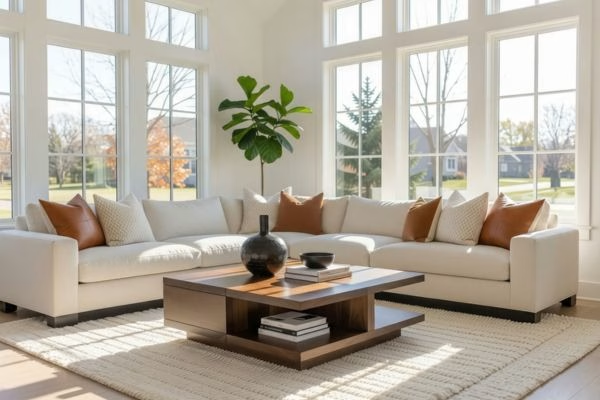
Shape is as important as height — the right form connects the table visually to the sofa and the room around it.
Shape is not just aesthetics — it directly affects traffic flow, knee safety, sofa pairing and how the table feels to live with day-to-day. Here is how the main shapes compare:
Best for straight or long sofas. Traditional, maximises surface area. Works in most room layouts but corners can catch shins.
Ideal for small rooms, homes with children, or where traffic flow is a priority. No corners, softer visual weight, pairs well with most sofa styles.
The practical middle ground — long surface like rectangular, but softened edges and gentler flow. Great for long sofas in rooms where traffic passes close.
Perfect anchor for large sectional sofas or symmetrical seating arrangements. Creates a strong central zone. Needs enough floor space to not feel crowded.
Best choice for small apartments or multifunctional spaces. Stack away when not needed, pull apart for entertaining. No fixed footprint commitment.
Beautiful for Japandi, rustic or natural styles. Measure the widest point carefully — the irregular edge means the actual footprint is larger than it looks.
From a solid wood manufacturer’s perspective: a thick slab tabletop on a heavy base carries strong visual mass. The same dimensions in oak will feel significantly larger in a room than the same table in glass or thin metal. Balance tabletop thickness, base weight and surrounding clearance — not just floor footprint.
⇒ Read more: Round vs Rectangular Table — shape decisions for dining and living spaces
Solid Wood Construction: Base Footprint, Stability and Safety
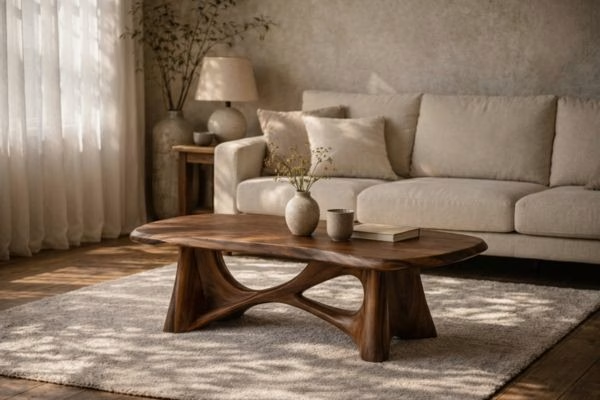
When buying a solid wood coffee table, most buyers measure the tabletop edge. But with X-base, splayed legs, pedestal or plinth-style bases, the widest point at floor level is what actually matters for clearance and trip hazards. Always ask for — or measure — the base footprint, not just the top dimensions.
Base Footprint vs Top Footprint
A pedestal or plinth base may protrude 3–6 in beyond the tabletop edge. If your sofa-to-table calculation is based on the tabletop only, the base could be significantly closer to the sofa than expected — reducing knee clearance and creating trip risk.
Toe-Stubbing Risk
Heavy solid wood tables with outward-splaying legs are a common toe-stub hazard, especially in the early weeks after furniture rearrangement. If the base protrudes more than 2–3 in past the tabletop edge, increase clearance or choose a base style with a tighter footprint.
Round or oval tables with a single central pedestal base need a wide, heavy base to remain stable under lateral force — especially if children lean on the table edge. Ask your manufacturer for the base width-to-top-diameter ratio and weight distribution data before ordering.
Edge Safety for Children
Sharp or square-edge solid wood at knee-and-shin height poses a real injury risk for toddlers and young children. Specify softened, eased or rounded edges (typically 3–6 mm radius) when ordering custom pieces, or choose oval and round shapes which have no sharp corners at all.
If you are weighing species options for the tabletop, the choice of wood affects visual weight as much as structural weight. Oak vs walnut carry different grain densities and colour depths — both will feel more visually substantial than engineered alternatives of the same size.
Quick tip: when requesting a custom solid wood coffee table, ask your manufacturer for three specific measurements — tabletop dimensions, base footprint at widest point, and overall weight. These three numbers tell you everything you need to plan clearance and check stability suitability for your household.
Lift-Top Coffee Tables for Small and Multitasking Spaces
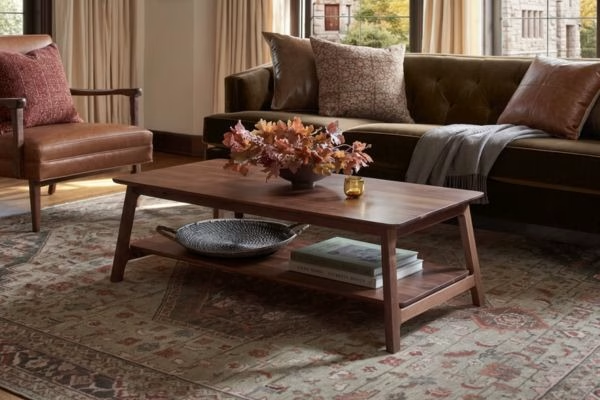
Lift-top coffee tables extend usable height to 24–28 inches — practical for casual dining, laptop work or extra storage in compact living rooms.
A lift-top coffee table sits at a standard coffee table height of 16–18 in when closed. When the mechanism is raised, the surface typically reaches 24–28 in / 61–71 cm — putting it at a comfortable height for eating, using a laptop short-term or accessing internal storage.
Laptop Use — Honest Assessment
Lift-top tables work for occasional laptop sessions. For daily full-day work-from-home use, you will still need a proper monitor height, external keyboard and ergonomic chair setup. A raised coffee table cannot replace a dedicated desk for extended use without shoulder and neck strain.
Mechanism Quality Matters
Check hinge and lift mechanism quality before buying. The mechanism should open and close smoothly without wobble, support the tabletop weight safely at full extension, and pull forward toward the seated user without tipping the base. Gas-spring or steel-arm mechanisms outperform cheaper spring-only designs.
Finger Pinch Risk
If children are present, check that the mechanism includes a safety stop or pinch guard. Many lift-top tables do not have this by default. Inspect the hinge point where the top meets the base when closing — that gap is the primary injury risk for small fingers.
Pro tip: if storage is a priority alongside lift functionality, look for lift-top designs with a secondary lower shelf or internal storage compartment beneath the raising surface. This doubles the utility without increasing the table’s floor footprint.
Coffee Table Sizing Matrix: Sofa, Height, Clearance and Shape
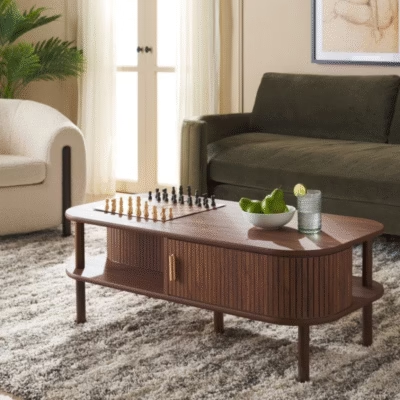
Use this matrix as a starting reference. Always measure your actual sofa and room dimensions before committing to any specific piece.
| Sofa / Room Type | Ideal Table Height | Length Rule | Recommended Gap | Best Shape |
|---|---|---|---|---|
| Standard sofa | 16–18 in / 40–46 cm | ½–⅔ sofa seat length | 14–18 in / 35–45 cm | Rectangular, oval |
| Low-profile sofa | 11–14 in / 28–35 cm | Keep visually light | 14–18 in / 35–45 cm | Low round, organic, slab |
| High-seat sofa | 18–22 in / 46–56 cm | ½–⅔ sofa seat length | 14–18 in / 35–45 cm | Rectangular, square |
| Sectional sofa | Match seat height zone | Fit central open area | 14–18 in; more near chaise | Round, square, nesting |
| Recliner / motion sofa | Standard or slightly higher | Avoid blocking footrest | 18–22 in / 45–55 cm+ | Round, oval, compact |
| Small apartment | 14–18 in, depending on sofa | Smaller footprint | Keep main walkway clear | Round, oval, nesting |
This matrix is a starting point, not a fixed prescription. Always verify height, length, clearance and base footprint before ordering. For custom or bulk solid wood orders, request a technical drawing or dimension sheet with all three key measurements: tabletop size, base footprint and finished height.
Conclusion: Better Proportion, Better Comfort, Better Living Room Flow
The right coffee table height — 16–18 in / 40–46 cm for most standard sofas — is the foundation of a living room that works. But that number is only meaningful when combined with sofa-matching logic, correct clearance, appropriate shape and an honest look at the base footprint you are actually putting in the room.
Key Takeaways
- Standard coffee table height: 16–18 in / 40–46 cm — the global benchmark for most sofas
- Height rule: level with or 1–2 in below sofa seat cushion — measure compressed height
- Sofa-to-table gap: 14–18 in / 35–45 cm — increase to 18–22 in for recliners
- Table length: ½ to ⅔ of sofa seating length — not overall sofa width
- Main walkway: minimum 24–30 in / 60–76 cm behind or beside the table
- Base footprint: always measure the base, not just the tabletop — especially with X-base or pedestal styles
- Solid wood visual weight: same footprint feels larger in oak or walnut than glass or metal — plan accordingly
A well-chosen coffee table is a daily-use piece — reached for dozens of times every day. Getting the coffee table height, clearance and proportion right from the start means it serves you well for years without the frustration of a table that sits too high, crowds your knees or blocks your path. Take the five minutes to measure before you buy; it is always worth it.
FAQ — Coffee Table Height Questions Answered
Click each question to read the full answer.
Partner with a Trusted Manufacturer
Moc Luc — Flexible OEM/ODM Partner for Solid Wood Furniture Brands
Moc Luc supports custom solid wood coffee table production with project-based dimensions, stable base construction, edge profiles, KD packing, export-standard packaging and consistent quality control for retail, hospitality and residential projects.
Request Project & OEM/ODM Support
Moc Luc Co., Ltd.
📍 Nam Tan Uyen Industrial Park, Tan Hiep Ward, Ho Chi Minh City, Viet Nam
📞+84 979 034 634 / +84 931 155 155
✉ sales@mocluc.com
🌐 mocluc.com