
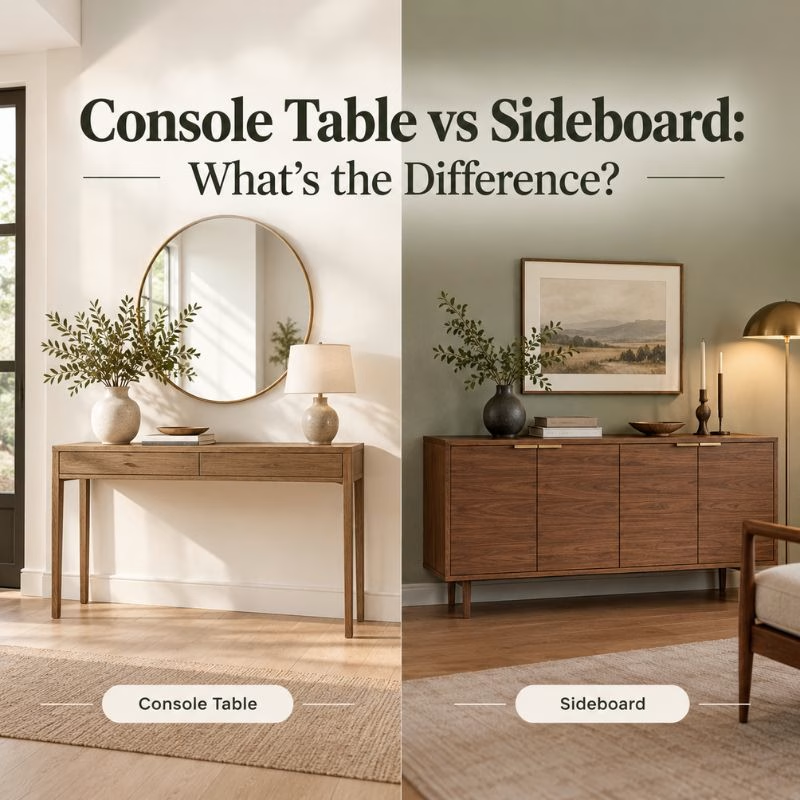
You need a piece of furniture against a wall – something for the entryway, behind the sofa or along the dining-room wall. Both console tables and sideboards can fill that role, and at first glance they may look similar. But they serve different needs.
In a console table vs sideboard comparison, the biggest difference is function: a console is generally slimmer and more display-oriented, while a sideboard is designed primarily for storage. The right choice depends less on the product label and more on your actual storage needs, available floor depth and room layout.
This guide compares design, storage capacity, dimensions, room placement and buying criteria so you can choose with confidence.
Quick Answer: What’s the Difference?
Console table: generally shallower, visually lighter, mainly a display or landing surface – common in entryways, hallways and behind sofas.
Sideboard: generally more cabinet-like, provides considerably more enclosed storage with doors, drawers or shelves – common in dining rooms and living rooms.
Categories can overlap – some consoles have drawers and some compact sideboards are relatively shallow. Choose a console when floor depth is limited; choose a sideboard when enclosed storage matters more.
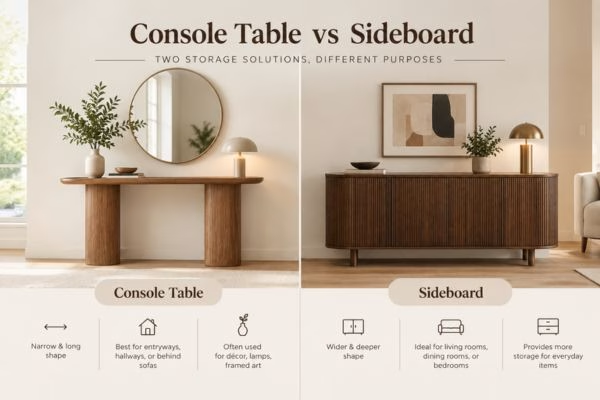
Console Table vs Sideboard: The Core Design Difference
Console Table – Slimmer, Display-Oriented
Typically has a slimmer profile with open legs or a lighter base. Storage is limited compared to a sideboard – the surface is the main feature, used for keys, lamps, mirrors, flowers or decorative objects. Some models include drawers or small cabinets, but the emphasis remains on visual lightness. A natural fit for transitional spaces: entryways, hallways and behind-sofa placement.
Sideboard – Storage-Oriented, Cabinet-Like
Built around a larger cabinet body with doors, drawers and internal shelves. Designed to hold dinnerware, glassware, table linen and household items. The top surface still works for lamps, artwork or serving dishes. Configurations vary – not every sideboard is fully enclosed – but storage capacity is typically the primary design intent.
Consumer takeaway: Think of a console as a surface first and storage second. Think of a sideboard as storage first and display surface second.
Console Table vs Sideboard: Quick Comparison
| Feature | Console Table | Sideboard |
|---|---|---|
| Primary purpose | Display / landing surface | Storage + serving/display surface |
| Typical profile | Shallower, lighter | More cabinet-like |
| Storage | Limited to moderate | Moderate to high |
| Visual weight | Lighter and more open | More substantial |
| Best locations | Entryway, hallway, behind sofa | Dining room, living room, larger wall |
| Doors/drawers | May have some | Usually more extensive |
| Floor-space needs | Generally lower | Generally higher |
| Best choice when | Floor depth is limited | Storage is a priority |
Quick takeaway: If your main problem is limited floor space, start with a console table. If your main problem is lack of storage, start with a sideboard.
Dimensions and Clearance: Which Takes Up More Space?
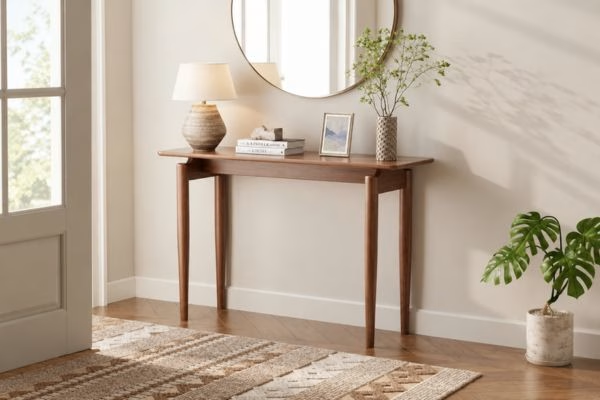
Console tables are generally shallower – many commonly available console tables fall around 30–50 cm (12–20 in) deep. Sideboards need more internal space for cabinetry, so they tend to be deeper. However, compact sideboards can overlap with deeper consoles, and height varies widely across both categories. Do not assume one is always larger than the other based on the furniture name alone.
Before buying, measure the actual room: wall width, furniture depth, remaining walkway and the space needed to open doors or drawers. Subtract the furniture’s depth from the available floor space and make sure normal movement through the room is not blocked.
Where Should You Use a Console Table or Sideboard?
Entryways and hallways: A console table usually fits better – shallower, lighter and provides somewhere for keys, a lamp or decor. A sideboard can work if the entryway is wide enough and storage is genuinely needed.
Dining room: A sideboard is typically more practical – dinnerware, linen, glassware and a serving surface. A console can suit a compact dining room where the household does not need much enclosed storage.
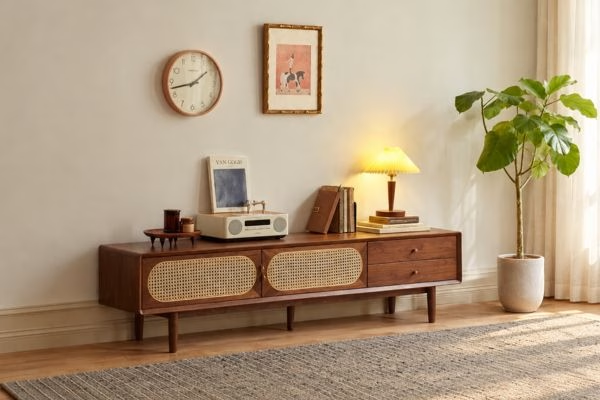
Living room: A console works well behind a sofa, below artwork or along a decorative wall. A sideboard suits a larger storage wall for books, tableware or household items. A sideboard can double as a media unit if the height, top strength and ventilation/cable management are appropriate.
Room labels are only a starting point. Choose according to available depth and what you actually need to store.
Can a Console Table and Sideboard Be Used Interchangeably?

Sometimes. A compact sideboard can work in an entryway if circulation space remains. A console can serve in a dining room when storage is not the priority. A deep storage console with drawers can function almost like a sideboard. The distinction between the two categories is not always absolute – decision should rest on actual dimensions, storage capacity, door/drawer operation and visual scale.
Furniture labels can overlap. The actual product design and room fit matter more than whether the retailer calls it a console or a sideboard. Both can be made from a wide range of wood species and constructed in solid wood or engineered materials – the material choice does not define the category.
Which One Should You Buy? A 3-Question Decision Framework
1. Do you need storage or mainly a display surface?
Need to hide dishes, linen, electronics or household clutter → Sideboard. Only need a spot for keys, a lamp, flowers or decorative objects → Console Table.
2. How much floor depth can the room handle?
Narrow entryway or transition area → a console is generally easier to accommodate. Larger wall with sufficient operating space → a sideboard becomes more practical.
3. How much visual weight does the room need?
Small, minimalist or light interior → a console creates less visual bulk. Large, open room or empty wall → a sideboard provides a stronger visual anchor.
Decision shortcut: Choose a console for surface + space efficiency. Choose a sideboard for storage + visual presence.
FAQ – Console Table vs Sideboard
Conclusion: Choose by Function and Space, Not the Label
A console table is generally slimmer and display-oriented. A sideboard is generally storage-oriented and visually more substantial. Neither is universally better – measure the room, assess how much storage you need and check the actual furniture dimensions. Choose the piece that solves your room’s real problem: a console when you need a lighter surface with a smaller footprint, or a sideboard when storage is the priority.
For brands and retailers developing solid-wood console tables, sideboards or custom storage furniture, Moc Luc can review dimensions, material selection, construction details and finish specifications at the project level.
Develop Console Tables & Storage Furniture with Moc Luc
OEM/ODM support for solid-wood furniture brands and retailers